Right of Way in Saber Fencing: How Priority Decides the Touch
Published Updated
When both lights fire in saber, the referee awards the touch by priority. Here is how attack, parry-riposte, point-in-line, and stop cuts actually work under FIE and USA Fencing rules.
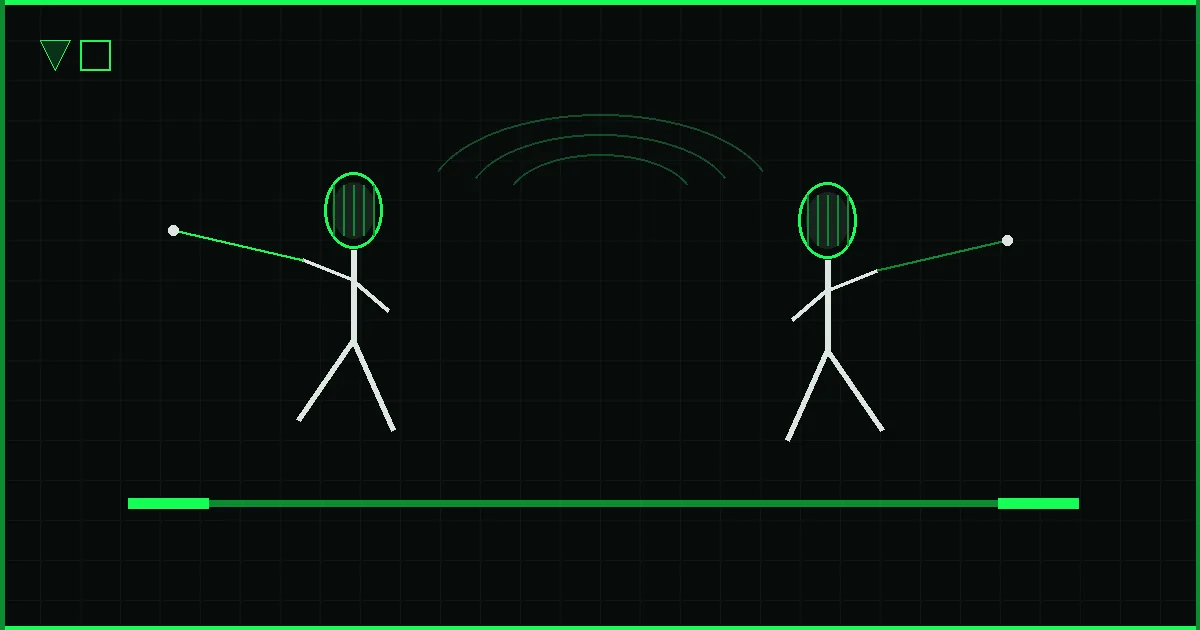
Both lights come on. The referee raises a hand, says something in French, and awards the touch to the fencer who - as far as you could tell - hit second. This is right-of-way, and it is the single biggest barrier to understanding saber from the sidelines.
It is also learnable in about ten minutes.
What right-of-way is
Right-of-way, which referees usually call priority, is a convention for deciding who scores when both fencers land in the same phrase. Foil and saber use it. Epee does not - in epee, if both land in the timing window, both score.
The convention exists for a reason rooted in the weapon's origin: it rewards the fencer who was threatening first, rather than the fencer who traded a hit for a hit. In a duel, hitting someone while they hit you is not a win.
USA Fencing's own framing is the shortest version worth memorising: if you are being attacked, you can parry or make the attack miss, and either one lets you take over priority and score. Hesitating on the advance gives the attack away.
Who owns the attack
The FIE Technical Rules define an attack as the initial offensive action, made by extending the arm and continuously threatening the opponent's valid target, before the lunge (t.9).
Three words carry the weight.
Initial - whoever started the offensive action.
Extending - the arm goes out first. An arm that straightens after the feet arrive is not an attack, and in saber this is the most common way beginners lose touches they thought they had won.
Continuously threatening - the threat cannot pause. A break in the forward intention ends the attack and gives the opponent the opportunity to take priority.
If a correct attack lands on valid target, it scores, and the fact that the defender also landed is irrelevant.
How the defender takes it back
Two ways, and only two.
Parry the attack, then riposte immediately. A parry is the defensive action made with the weapon to prevent the attack arriving (t.9, t.14). A successful parry gives the right to riposte, and the riposte - direct or indirect - must be carried out immediately, without hesitation or pause, to cancel any further action by the attacker (t.105).
Against saber's cuts with the edge, flat or back, the parry is properly executed when it closes the line where the attack will finish before the attack is completed. Once that is done, the referee must treat the attack as parried even if a flexible blade's tip still brushes target afterwards (t.105).
Make the attack miss. Dodging or retreating out of distance also ends the attacker's claim, and leaves you free to hit.
What does not work is hitting into the attack and hoping. That is a counterattack, and under the convention it generally loses unless it lands a full fencing period ahead of the attack arriving - see the counterattack guide.
Simultaneous actions
When both fencers conceive and execute an attack at the same time, it is a simultaneous action: neither touch counts (t.106.1). Because no touch is awarded, the fencers restart from where they were standing when the referee called "Halt" (t.22.7), not from the on-guard lines. Fencers only go back to the on-guard lines after a valid touch (t.22.6) or at the start of a period. Many saber simultaneous actions happen near the middle of the strip right off "Fence!", though, so the restart often looks like a reset.
This is not a fudge or a referee giving up. It is the convention saying that neither fencer established priority, so neither earned the touch. At high-level saber, long strings of simultaneous actions are common and are themselves tactical - fencers are probing to find out who will commit first.
The calls that cost touches
FIE t.106 lists the errors that hand the touch to the other side even when both lights fire. The ones that matter most in saber:
- Stop-hitting into a simple attack. Counterattacking a straightforward attack loses.
- Failing to parry or dodge, and hitting instead. Trading is not a defence.
- A delayed riposte after a good parry. The pause is fatal - the attacker can renew with a remise, redoublement or reprise and take the touch back (t.13, t.106.3.c).
- A late stop-hit into a compound attack. It must land in time, not merely land.
- Leaving the point in line, having the blade taken, and then attacking rather than parrying.
Almost every one of those is a timing error rather than a technique error, which is why right-of-way is trained on the strip rather than explained in a classroom.
How to fence the convention
Extend before you move. This one habit fixes more lost touches than anything else.
Finish what you start. A half-committed attack invites the opponent to take priority. If you have started, arrive.
Make your parry decisive and your riposte instant. The gap between them is where touches are lost. This is the core of the parry and riposte guide.
Watch the referee, not just the box. Referees narrate the phrase - attack, parry, riposte - and learning to follow that narration is how fencers and parents both learn to read the sport.
Questions
Why did the referee give the point to the fencer who hit second?
Because they had priority - they either launched the correct attack first, or they parried and replied immediately. The box shows who landed; the referee decides who scored.
Does right-of-way apply in epee?
No. Epee has no priority convention at all. It applies in foil and saber only.
Is right-of-way subjective?
The convention is written down and precise, but applying it in real time to a fast phrase requires judgement, and referees do disagree at the margins. Saber's speed makes this more visible than in foil.
How long does it take to understand?
Spectators generally get the basics within a few bouts of having it explained. Fencing it well - knowing in the moment whether you own the phrase - takes considerably longer.
Related reading
- Parry and Riposte in Saber Fencing
- What Is a Counterattack in Saber Fencing?
- What Is a Remise in Saber Fencing?
- Saber Fencing Target Area
- Fencing Penalty Cards Explained
Sources
- USA Fencing, Basics of Competition
- FIE Technical Rules, August 2026: t.9, t.13, t.14, t.22, t.96, t.105, t.106 (PDF)
- USA Fencing, Rules for Competition, October 2026: t.22, t.106
- Olympics.com, Differences between foil, epee and sabre
Drill the convention in Bethesda
Right-of-way is learned on the strip, with a referee's voice attached to the actions. Saber Nation is a saber-only club at 4701 Sangamore Road, Suite LL2, Bethesda, MD, and priority is what group classes and private lessons spend most of their time on. New to saber? Start with the Beginners Introductory Package. Contact us with questions.
Related guides
Related techniques
- What Is a Flunge in Saber Fencing?
- What Is Point in Line in Saber Fencing?
- What Is a Compound Attack in Saber Fencing?
- What Is a Beat Attack in Saber Fencing?
- What Is a Counterattack in Saber Fencing?
- What Is an Attack in Preparation in Saber Fencing?
- What Is a Simultaneous Attack in Saber Fencing?
- How to Hold a Saber: Grip Basics for Beginners
- Fencing Referee Commands: On Guard, Ready, Fence, Halt
- What Is a Feint in Saber Fencing?
- What Is a Disengage in Saber Fencing?
- What Is Corps-à-Corps in Saber Fencing?
- Saber Parries: Parry 3, 4, and 5 Explained
- Coupe and Cutover in Saber Fencing
- Distance (Measure) in Saber Fencing
- What Is a Whip-Over in Saber Fencing?
- Video Replay in Saber Fencing: How Video Review Works
- How Much Does Fencing Cost? Classes, Gear, and Fees
- Second Intention in Saber Fencing
- Parry and Riposte in Saber Fencing
- What Is a Remise in Saber Fencing?
Train saber in Bethesda
Saber Nation is a dedicated saber club led by Owner and Head Coach Fikrat Valiyev at 4701 Sangamore Road, Suite LL2, Bethesda, MD 20816.