How Long Is a Saber Fencing Strip? Piste Size, Warnings, and Off-Strip Rules
Published Updated
A regulation saber fencing strip (piste) is 14 metres long and 1.50 metres wide. Here are FIE warning lines, rear-limit touches, and what happens when both feet leave.
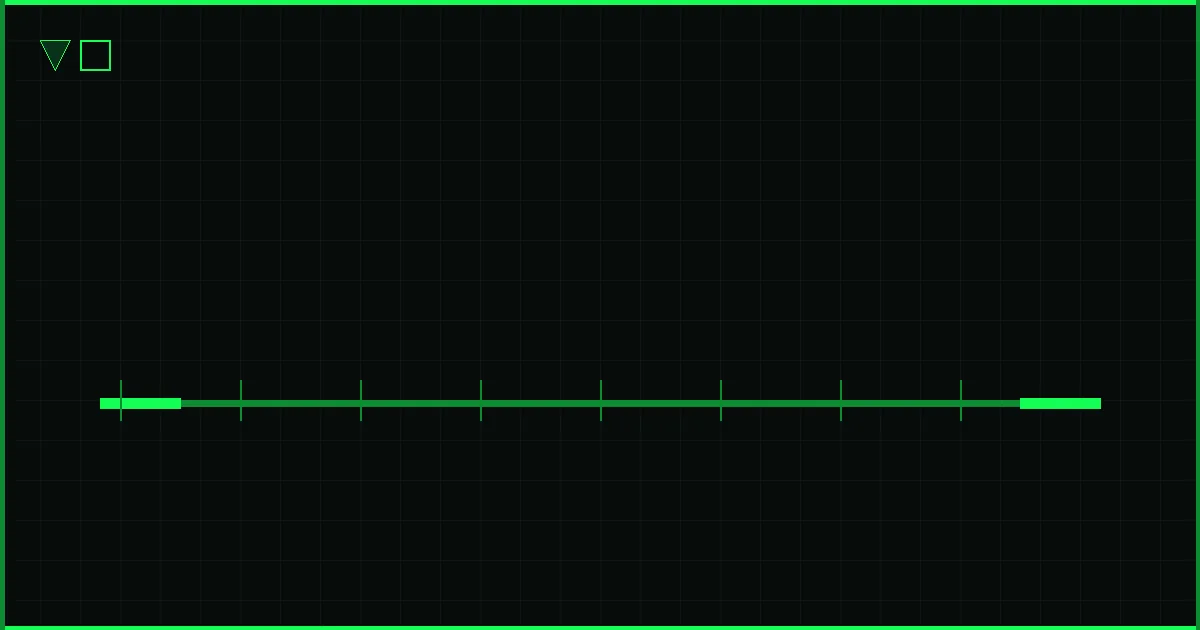
How Long Is a Saber Fencing Strip? Piste Size, Warnings, and Off-Strip Rules
A saber fencing strip looks narrow until you are the one running out of room. In competition fencing, that strip is the piste. FIE Technical Rules set the same piste for foil, épée, and sabre: 14 metres long and 1.50 metres wide, with marked warning zones and clear penalties when both feet leave (FIE Technical Rules, August 2026, articles t.17–t.19 and t.33–t.36).
Olympics.com describes the same playing area as a 14 m piste about 1.5–2 m wide, and notes that retreating off the end awards a point to the opponent (Olympics fencing overview; Everything you need to know about fencing).
Piste length and width (FIE numbers)
Per FIE article t.18:
- Combat area width: 1.50 metres
- Length: 14 metres (total length tolerance of 4 cm)
- Retreat space from the on-guard line: each fencer, placed 2 metres from the centre line, has 5 metres to retreat before both feet would cross the rear limit
Conductive safety borders beside the strip do not count as part of the piste (t.18.3). All three weapons fence on the same pistes (t.17.2).
So when someone asks “how long is a saber fencing strip,” the short answer is 14 metres — roughly 46 feet — with a combat width of 1.50 metres.
Lines you will see on the strip
FIE article t.19 requires five clear lines across the width:
- Centre line — broken line across the piste
- On-guard lines — 2 metres on each side of centre (front foot starts just behind these)
- Rear limit lines — 7 metres from the centre on each end
- Warning zone — the last 2 metres before each rear limit must be clearly distinguished, ideally by a different piste colour, so fencers know they are near the end
That coloured last 2 metres is the warning area coaches mean when they say “you’re in the warning.” It is not a separate halt by itself. It is a visual cue that the rear limit — and a possible awarded touch — is close.
What happens when you leave the piste
Rear limit (end of the strip)
If a fencer crosses the rear limit completely with both feet, a hit is scored against them (t.34). That is the classic “off the end” point.
Side (lateral) boundaries
When a fencer steps completely off a side boundary with one or both feet, the referee must call “Halt!” (t.33.1).
Key details from t.33–t.35:
- Both feet off the side: actions after the boundary is crossed are generally annulled, except a hit received by the fencer who left, if that hit comes from a simple, immediate action
- One foot only off the side: a hit scored by the fencer who left can still be valid if the action started before “Halt!”
- Foil and sabre: when one fencer leaves with both feet, priority/convention still applies (unlike épée’s special double-hit wording in t.33.4)
- Penalty placement: the fencer who left laterally must step back one metre from the exit point; if they left during an attack, they return to where the attack started, then step back another metre (t.35.1)
- Technical hit: if that one-metre (or attack-plus-metre) placement puts both feet beyond the rear limit, the fencer is considered hit (t.35.2)
- Leaving to avoid a hit: crossing a lateral boundary with both feet to avoid being hit is a first-group offence; any hit by the offending fencer is annulled (t.35.3)
- Accident: involuntary exit from jostling or similar carries no penalty (t.36)
Sabre-specific notes on strip play
The piste dimensions are identical for sabre. What changes is how fencers use the space.
Sabre forbids the flèche and any forward movement in which the rear foot completely passes the front foot (t.101.5). That rule shapes strip tactics: sabreurs advance and retreat, but they do not run past the opponent the way foil or épée sometimes do. Distance management still matters. A poorly timed retreat into the warning zone invites pressure. A side step that puts both feet off the piste can erase your own touch and, in the worst case, walk you into a technical hit at the rear line.
Sabre also uses right-of-way. USA Fencing’s basics of competition explain how the referee awards priority when both lights come up (USA Fencing: Basics of Competition). Strip exits interact with that system: if you leave with both feet, later actions are usually wiped, and at foil/sabre the convention still governs whose light counts when both register.
For how those lights and the box fit together, see our guide to saber fencing scoring. For how priority is decided when both fencers hit, see right of way in saber fencing.
Quick reference table
| Feature | FIE rule (Aug 2026) |
|---|---|
| Strip / piste length | 14 m (±4 cm total) |
| Combat width | 1.50 m |
| On-guard lines | 2 m from centre |
| Rear limits | 7 m from centre |
| Warning zone | Last 2 m before each rear limit |
| Both feet past rear limit | Hit against that fencer |
| Lateral exit | Halt; 1 m step-back (more if leaving during attack) |
| Same piste for all weapons | Yes (foil, épée, sabre) |
Source: FIE Technical Rules, August 2026, t.17–t.19, t.33–t.36.
Why strip awareness matters in training
Beginners often fence the middle of the strip and forget the ends exist until a referee awards a touch. Working the warning zone in practice — controlled retreats, recovering distance without stepping off the side, and pressing an opponent who is already in the last 2 metres — turns piste size from trivia into tactics.
If you are still learning how a bout is structured, pair this with how long a saber fencing bout lasts. For how yellow and red cards interact with leaving the strip to avoid a hit, see fencing penalty cards. New fencers can start with group classes in Bethesda.
Train strip awareness at Saber Nation
Saber Nation Fencing Club is a saber-focused salle in Bethesda, Maryland, serving Bethesda, Chevy Chase, Washington DC, and Arlington / Northern Virginia from that one location. Private coaching is a strong place to drill distance and end-of-strip decisions — request a private lesson or contact the club for class and membership questions.
Related guides
Train saber in Bethesda
Saber Nation is a dedicated saber club led by Owner and Head Coach Fikrat Valiyev at 4701 Sangamore Road, Suite LL2, Bethesda, MD 20816.